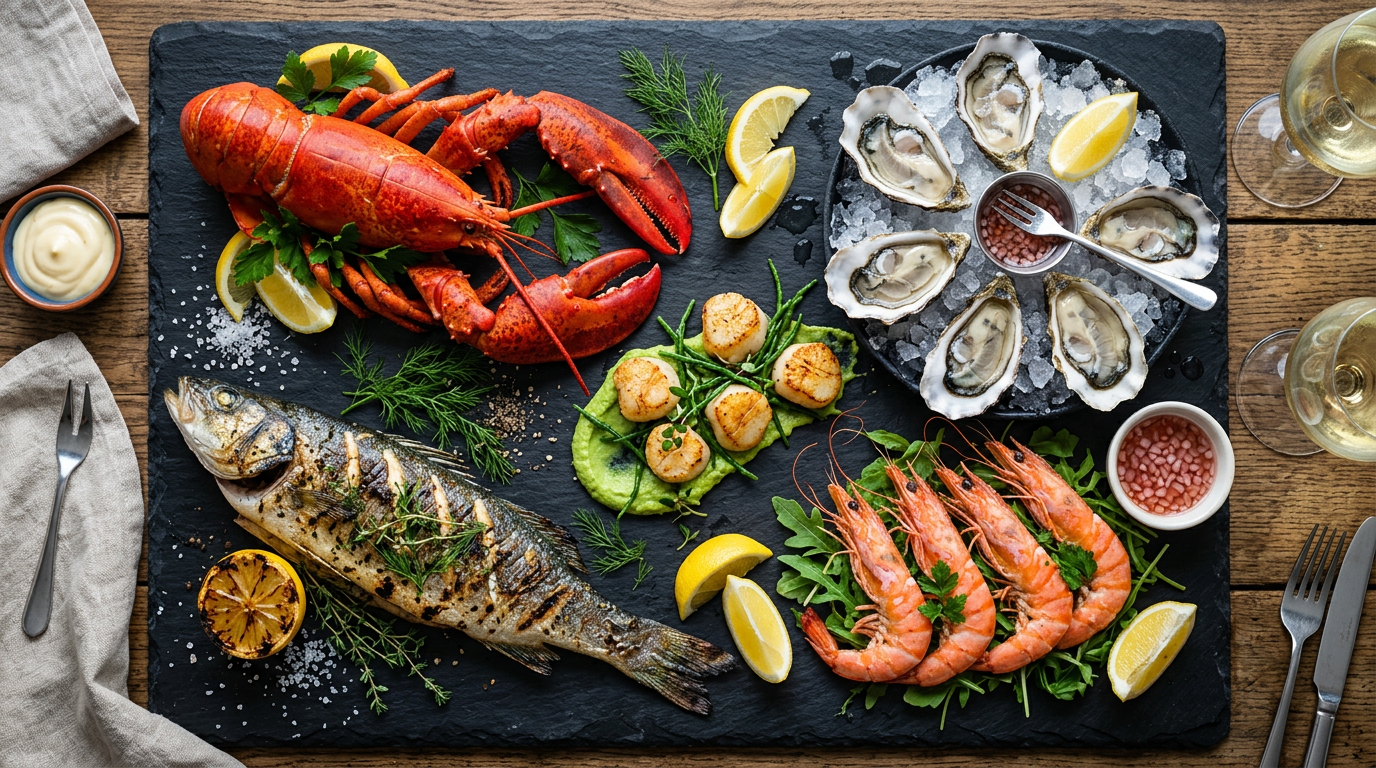
Seafood is arguably the world's oldest cuisine. Long before agriculture enabled the cultivation of grains and the domestication of animals, coastal communities around the planet were sustaining themselves on the extraordinary bounty of rivers, lakes, and seas. The methods they developed – curing, smoking, fermenting, marinating, and cooking over open fire – are still the fundamental techniques of the world's great seafood traditions. Understanding them is not merely a culinary education; it is a form of engagement with human history at its most elemental.
What distinguishes a truly great seafood culture from merely competent fish cookery is attitude as much as technique. The Japanese principle of ikejime – the precise killing of a fish to prevent muscular spasms that degrade the flesh – speaks to a level of care for ingredient quality that transforms the entire enterprise. Portuguese reverence for bacalhau, salt cod, reflects a centuries-old understanding that the right preservation technique can create flavours inaccessible to fresh cooking alone. Peruvian ceviche demonstrates that acid can "cook" protein in ways that heat cannot, producing textures and brightnesses that fire would destroy.
Japan: The Supreme Seafood Culture
Japan's relationship with seafood is without parallel in world cuisine. The country consumes approximately 7% of the world's fish harvest despite representing less than 2% of global population, and the sophistication with which this consumption is approached – from the daily rituals of Tsukiji market to the exacting standards of a master sushi chef – reflects a culinary philosophy in which seafood occupies a genuinely sacred position. The Japanese concept of umami, the fifth taste, was first identified and articulated in relation to dashi, the fundamental stock made from dried kombu seaweed and katsuobushi (dried bonito flakes). This foundational flavour principle shapes the entire Japanese approach to seafood preparation.
Sushi and sashimi represent the pinnacle of raw seafood preparation, but they are only two expressions of a vastly diverse national cuisine. Grilled fish with salt (shioyaki), simmered fish with soy and mirin (nitsuke), tempura-battered seafood, and the extraordinary complexity of traditional kaiseki seafood courses – each reflects a different set of values and techniques. Eating uni (sea urchin) at its peak season, taken from Japanese waters and served immediately on warm rice with nothing but a touch of soy, is a taste experience of startling intensity that is simply unavailable outside Japan and the highest-quality sushi restaurants in the world.
Portugal: The Bacalhau Nation
Portugal is said to have 365 recipes for bacalhau – one for every day of the year – and while this claim may be slightly optimistic, the spirit behind it is entirely accurate. Salt cod, dried and preserved to last months at sea, was the fuel of Portugal's Age of Discovery; Portuguese fishermen were salting cod off the Newfoundland Grand Banks as early as the 15th century, generations before the first permanent European settlements in North America. The flavour that results from this centuries-old technique – assertively saline, richly mineral, dense with umami – is entirely different from fresh cod and requires its own culinary grammar.
Beyond bacalhau, Portugal produces some of the finest fresh seafood in Europe. The Atlantic coast is rich with sardines, octopus, clams (amêijoas à Bulhão Pato, cooked in white wine and garlic, is among the most perfect simple dishes in European cuisine), percebes (goose barnacles, a delicacy that requires considerable courage on first encounter but reveals an extraordinary depth of oceanic flavour), and the extraordinary grilled fish that forms the backbone of any proper Portuguese meal. The seaside restaurants at Cascais, Sesimbra, and Setúbal, with their daily catches displayed on ice in restaurant windows, represent one of the most honest and satisfying dining cultures in the world.
Peru: The Ceviche Revolution
Peruvian cuisine has undergone a global renaissance in the past two decades, driven partly by the international success of chefs like Gastón Acurio and partly by a growing recognition among food lovers worldwide that the country's cooking – a synthesis of indigenous Andean traditions, Japanese immigrant techniques (the Nikkei cuisine), Chinese influence (chifa cuisine), and Spanish colonial flavours – is among the most complex and original in the world. At its heart, however, is ceviche: raw fish cured in citrus juice (traditionally the bitter naranja agria, now more commonly lime), seasoned with ají amarillo chilli, red onion, garlic, and salt, and served within minutes of preparation.
The key to a great ceviche is freshness so extreme that the fish is essentially still at its peak of cellular integrity when the acid bath begins. In Lima's finest cevicherías – and Lima has more outstanding seafood restaurants per capita than almost any city in the world – the day's catch arrives from the nearby Pacific in the early morning and is transformed into lunch by midday. The leche de tigre (tiger's milk), the citrus-based marinade that remains in the bowl after the fish is eaten, is drunk as a separate course and is considered a restorative with almost mythological properties by Peruvians. A plate of good ceviche eaten in Lima remains one of the most bracingly alive eating experiences available anywhere on the planet.
Spain and the Basque Country
The Basque Country, straddling the border between northern Spain and southern France, has one of the highest concentrations of Michelin-starred restaurants of any region in the world, and seafood lies at the centre of its culinary identity. The pintxos bars of San Sebastián's old town – tiny elaborate creations displayed on counter tops, each combining seafood, bread, and various embellishments with considerable artistry – represent a form of culinary expression that has no close equivalent in other European food cultures. Eating pintxos properly, moving from bar to bar in the company of locals who have been doing the same walk for decades, is one of the great food experiences of Europe.
The Basque tradition of txoko – private members' eating societies where groups of friends cook for each other using the finest seasonal ingredients – has been documented as a contributor to the region's extraordinary culinary culture. The emphasis on quality raw materials, technical mastery, and convivial sharing creates an environment in which serious cooking is both a social act and an artistic one. Basque seafood preparations – kokotxas al pil-pil (the gelatinous jowls of salt cod emulsified in olive oil and garlic into a velvety sauce), marmitako (tuna stew with potatoes), and simply grilled fresh anchovies – demonstrate a mastery of both the delicate and the robust registers of seafood cooking.
Thailand and Southeast Asia
Thai seafood cookery operates on a different sensory register from European traditions, engaging sweetness, sourness, saltiness, and heat simultaneously in combinations that can initially feel overwhelming but reveal a sophisticated internal logic on closer acquaintance. Tom yum goong – the hot and sour prawn soup that has become Thailand's most internationally recognised dish – exemplifies this approach: the broth made from galangal, lemongrass, kaffir lime leaves, and fish sauce is a masterclass in flavour layering, with each ingredient performing a distinct role while contributing to a whole that is far more than the sum of its parts.
The seafood markets of coastal Thai cities – and particularly the floating markets around Bangkok and the night markets of Phuket and Krabi – offer some of the most visually spectacular food experiences in the world. Enormous displays of squid, clams, mantis shrimp, crab, and fish of every description are laid out on ice and priced by weight; the customer selects their protein, chooses their preferred preparation method, and waits while a wok cook over intense flame transforms the ingredients into something of considerable immediacy and flavour. Eating this way – squatting at a plastic table in a market hall, sharing grilled seafood with strangers, drinking cold Singha beer – is one of the most satisfying ways to spend an evening in Southeast Asia.
The Universal Principles of Great Seafood
Despite their surface diversity, the world's great seafood traditions share several fundamental principles. Freshness is non-negotiable: the difference between fish caught this morning and fish caught yesterday is, in a quality-focused context, the difference between a meal worth remembering and a meal worth forgetting. Simple preparations – the grill, the steam, the acid bath – are often more revealing of quality than complex sauces, which is why the finest seafood restaurants in every culture tend towards transparency rather than disguise. And the relationship between seafood and its environment – the salinity of the water, the temperature, the diet of the fish – is encoded in the flavour of every plate, making great seafood a form of terroir-driven tasting that rivals the greatest wines in its expressiveness.
For the travelling food lover, the world's coastlines offer an inexhaustible curriculum. Every port has something to teach: a preparation technique, a flavour combination, a relationship between a specific fish and a specific cooking method that has evolved over generations of practical wisdom. Following this education requires nothing more than curiosity, a willingness to eat at places that look like they have been there for a long time, and a preference for whatever is swimming in the water outside.