The combination of exceptional dining, unhurried days, and limited opportunity for the walking that naturally punctuates life on land makes maintaining fitness during extended cruises a genuine challenge. The average person walks considerably less on a ship than in their daily life at home, even on vessels large enough to require significant walking between their various facilities. Combined with the social and gastronomic pleasures that are central to the cruise experience, this reduced baseline activity creates conditions that can easily result in a significant caloric surplus over the course of a longer voyage.
Understanding this challenge is the first step to managing it effectively. The traveller who arrives on a ship intending to maintain exactly the same fitness routine they follow at home is likely to be disappointed; the environment is too different, the social opportunities too varied, and the temptations too numerous to sustain a rigid regime. The more useful approach is to establish a modified but consistent routine that fits the rhythms of shipboard life, takes advantage of the genuine opportunities for exercise that a well-equipped ship provides, and incorporates movement into the broader pattern of the day rather than treating it as a separate, effortful obligation.
The Ship's Gym: Equipment and Timing
Modern cruise ships are equipped with fitness centres that range from adequate to genuinely impressive, offering cardiovascular equipment, free weights, resistance machines, and often dedicated studios for group fitness classes. The quality of shipboard gyms has improved dramatically over the past decade as cruise lines have responded to passenger expectations; newer vessels from major lines typically offer facilities that compare favourably with mid-range city gyms on land.
The most important factor in making good use of a shipboard gym is timing. The windows around early morning (before 7am) and late evening (after 9pm) are typically significantly less crowded than the midday and early afternoon periods when gym use peaks during sea days. Cardiovascular equipment in particular – treadmills, rowing machines, and cycle ergometers positioned facing ocean-view windows – is in high demand during peak hours and can require waiting on popular vessels. The early morning session also has the additional advantage of setting a positive tone for the rest of the day and creating genuine appetite for the breakfast that follows.
Deck Walking and Running
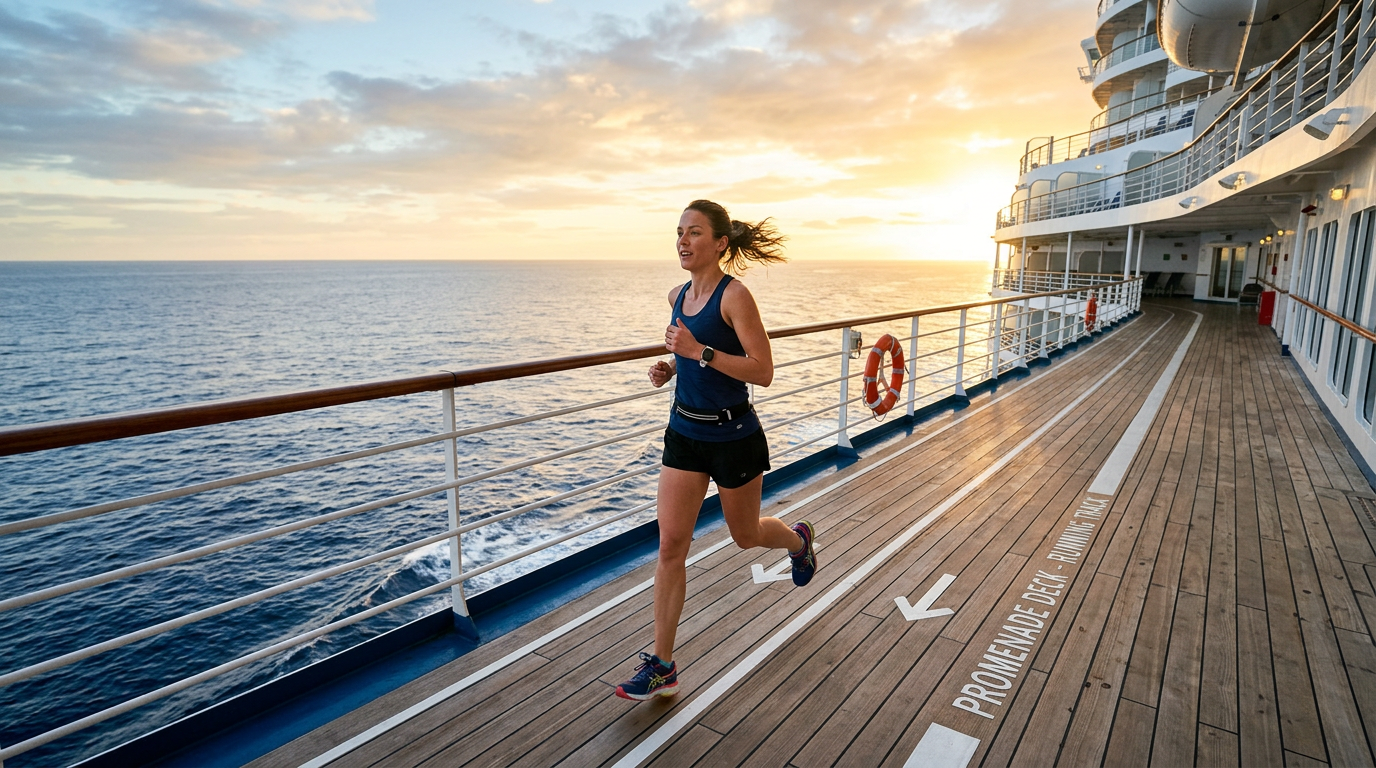
The promenade deck walk is one of the oldest and most satisfying forms of shipboard exercise, and it remains one of the best. Walking circuits of the outer promenade deck – typically between 350 and 500 metres per circuit on most large cruise ships – provides an agreeable form of low-intensity exercise that can be sustained for extended periods in the open air, with the sea visible in all directions and the natural light that indoor gym environments cannot replicate. A sustained walk of forty-five to sixty minutes at a brisk pace covering six to eight circuits represents a worthwhile cardiovascular session accessible to almost all fitness levels.
Running on deck is possible on most large ships, though it requires flexibility about time and conditions. Dedicated running tracks are provided on some vessels; on others, the promenade deck accommodates both walkers and runners, which requires awareness of other users and appropriate adjustment of pace in congested areas. The physical experience of running with an ocean horizon in all directions and salt air at high velocity has a particular quality that many passengers describe as among the most memorable exercise experiences they have encountered anywhere.
Yoga and Mindful Movement at Sea
The ocean environment provides an exceptionally conducive backdrop for yoga, Pilates, and other forms of mindful movement. The psychological quality of the oceanic horizon – its vast scale, its suggestion of freedom, its constant slow variation of light and movement – creates conditions for focused attention that many practitioners find significantly superior to studio environments on land. Several cruise lines now offer dedicated open-deck yoga sessions, typically scheduled in the early morning before other deck activities begin, that take advantage of this environment with considerable skill.
A personal practice requiring only a mat and modest floor space can be maintained in a cabin of almost any size: most cruise ship cabins, while compact, provide sufficient floor space for a standing yoga practice or floor-based Pilates work if furniture is briefly moved. The discipline of maintaining a daily practice in a small space also has its own value, encouraging economy of movement and attention to the quality of each position that more spacious environments sometimes allow practitioners to bypass. Bringing a travel yoga mat – light, thin, and designed to roll into a small cylinder – ensures that the option to practice independently is always available regardless of ship programming.
Swimming and Water Activities
Swimming pools aboard cruise ships offer a further exercise option that requires no specialist equipment and provides a complete cardiovascular and resistance workout in a compact space. Lap swimming in a ship's pool is technically challenging – ship pools are generally too short for conventional laps, requiring constant turns – but the resistance of the water and the sustained effort of any form of continuous swimming provide genuine aerobic benefit. Early morning, before pools fill with recreational swimmers, typically offers the most favourable conditions for any kind of focused swimming practice.
At ports of call, shore excursions involving significant physical activity – walking city tours, cycling tours, kayaking or snorkelling excursions, hiking in coastal landscapes – provide both excellent exercise and a far richer engagement with the destination than purely passive sightseeing. Choosing at least some active excursions at each port, rather than exclusively vehicle-based tours, contributes meaningfully to fitness maintenance while typically offering more memorable and authentic experiences of the places visited.
The key insight for fitness at sea is that the voyage itself, approached with intention, offers genuine opportunities for movement that a passive approach will miss entirely. The ship provides the tools; the traveller provides the discipline to use them consistently. Those who establish a morning routine of deck walking or gym work in the first day or two of a voyage, before other habits solidify, typically find it straightforward to maintain that routine throughout even extended journeys. And the reward – arriving home after a long cruise feeling as good physically as when you departed – is, for those who achieve it, one of the most satisfying aspects of the voyage experience.