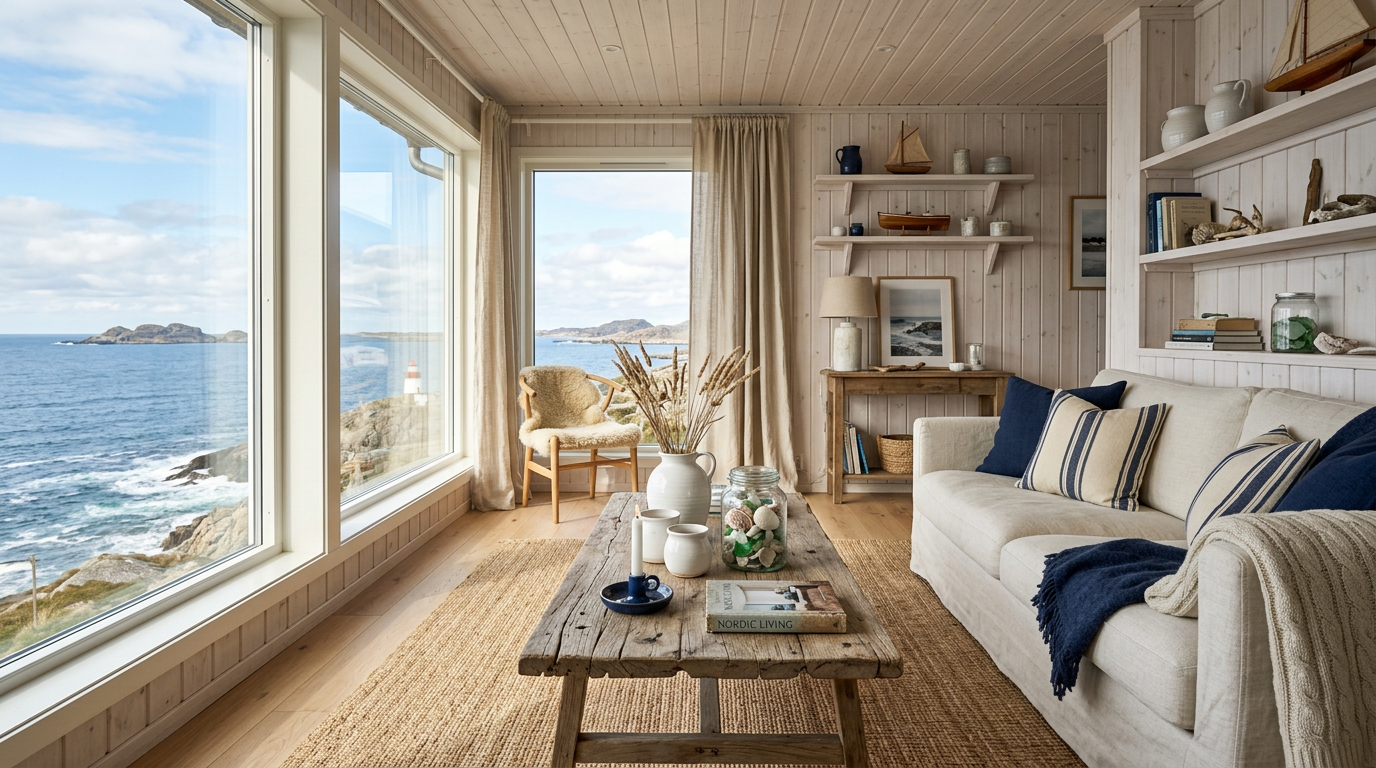
The appeal of nautical interior design is not difficult to understand. The ocean has always exerted a powerful psychological pull on human beings – a combination of freedom, serenity, and possibility that is difficult to replicate in landlocked environments. Spaces that reference the sea draw on these associations in ways that can profoundly affect how we feel in our homes. The best coastal interiors do not merely decorate rooms with marine imagery; they create environments that genuinely feel spacious, peaceful, and alive in the way that a well-designed boat feels alive.
Contemporary nautical design has evolved well beyond the kitsch of anchor motifs, navy-and-white striped cushions, and decorative ships in bottles. The most sophisticated coastal interiors draw on the design principles of the best boat interiors – intelligent use of limited space, emphasis on natural materials, a palette drawn from the colours of sea and sky – and apply them to domestic contexts with considerable restraint. The result is spaces that suggest the ocean without declaring it, creating an atmosphere that feels calm and connected without resembling a maritime museum.
The Nautical Colour Palette: Beyond Navy and White
The classic nautical palette of navy blue and crisp white remains as fresh as ever when used with intelligence and proportion. The key is to allow white to dominate – painting walls, ceilings, and large architectural features in white or near-white creates the light, airy quality that is fundamental to the coastal aesthetic – while using navy as an accent on furniture, textiles, and select architectural details. The ratio of white to navy in successful coastal interiors is typically around four to one; more navy and the space begins to feel enclosed and heavy rather than open and marine.
More adventurous nautical palettes draw on the full range of coastal colours: the deep aquamarine of shallow Caribbean water, the grey-green of the North Atlantic, the warm terracotta of Mediterranean ports, the bleached sand of northern European beaches. These colours work particularly well when drawn together through natural materials – linen, rattan, weathered timber, cotton – that carry their own softness and texture into the scheme. A living room in pale sand, bleached timber, and terracotta accents, with blue-grey linen curtains that move in a coastal breeze, achieves something genuinely maritime without a single anchor or rope in sight.
Natural Materials: The Foundation of Coastal Design
The most effective nautical interiors are distinguished above all by the quality and authenticity of their materials. Salvaged and weathered timber – from old boat planking, dock boards, or driftwood – brings a patina and character to floors, walls, and furniture that no synthetic substitute can approach. The combination of irregular grain, natural greying, and the slight imperfections of aged wood creates a visual texture that is immediately associative of coastal environments and deeply satisfying in its honesty.
Natural rope is another material of powerful nautical resonance that translates beautifully into interior contexts. Sisal, jute, and manila rope in various weights can be used for light fittings, furniture details, stair banisters, and decorative accessories in ways that suggest maritime life without literal-minded reference. The texture of natural rope fibre against smooth white-painted walls creates a contrast that is simultaneously simple and sophisticated. Combined with cotton canvas, linen, and woven seagrass matting, these natural materials build a tactile environment that appeals to multiple senses simultaneously.
Light and Space: The Coastal Priority
Nothing communicates coastal living more effectively than abundant natural light. The most successful nautical interiors prioritise the maximisation of natural light above almost all other design considerations: large windows, minimal window dressings, pale reflective surfaces, and the strategic use of mirrors to multiply the sense of space and bring sky and garden into the interior. In rooms without extensive natural light, the coastal aesthetic can be maintained through the use of high-quality artificial lighting in warm white temperatures that mimic the quality of reflected ocean light.
Spatial organisation in well-designed coastal homes draws on boat design principles: everything has its place, storage is integrated rather than afterthought, and the flow between spaces is logical and unobstructed. The best boat interiors achieve remarkable comfort and functionality within very small footprints precisely because they have been designed with absolute purposefulness. Applying this discipline to larger domestic spaces – editing ruthlessly, removing what is not needed, giving breathing room to what remains – produces environments that feel simultaneously simpler and more spacious than conventionally furnished rooms.
Furniture: Weathered, Simple, Enduring
The furniture vocabulary of coastal design is drawn from the practical objects of maritime and seafaring life: the captain's chair, the sea chest, the companionway ladder, the deck bench. These forms share a quality of purposeful simplicity – they were designed to function in demanding environments, and their design has been refined over centuries to achieve the best possible combination of comfort, durability, and space efficiency. Contemporary furniture makers who draw on these traditions produce pieces of considerable beauty and genuine longevity.
Specific furniture choices that work consistently well in nautical interiors include: solid oak or ash tables with simple, unornamented forms; chairs with woven cane or sea-grass seats; metal-framed beds with cotton or linen bedding in ocean-inspired colours; storage pieces with simple hardware in brass, bronze, or gunmetal; and low bookcases that display books, shells, sea glass, and curated nautical objects rather than concealing them. The key principle is restraint: coastal interiors are characterised by what is not present as much as what is, and every object should earn its place through beauty, function, or genuine personal significance.
The Garden and Outdoor Spaces
The transition between interior and exterior is particularly important in coastal design. The best coastal homes dissolve the boundary between inside and outside as completely as possible, using consistent material palettes, similar colour schemes, and carefully proportioned openings that frame views of garden, sea, or sky. Decking in weathered hardwood or composite, salt-tolerant planting in colours drawn from the coastal palette (sea lavender, thrift, agapanthus, ornamental grasses), and outdoor furniture chosen with the same discipline applied to interior pieces create an outdoor environment that feels continuous with the interior rather than separate from it.
Whatever scale of space you are working with – a coastal cottage, a city flat, or a suburban family home – the principles of nautical interior design offer a reliable framework for creating environments that feel genuinely peaceful, beautifully simple, and alive with the quality of light and air that the ocean, at its best, always provides. The ocean does not need to be visible to be present; in a well-designed coastal interior, it is felt in every surface, every colour, and every carefully chosen material.