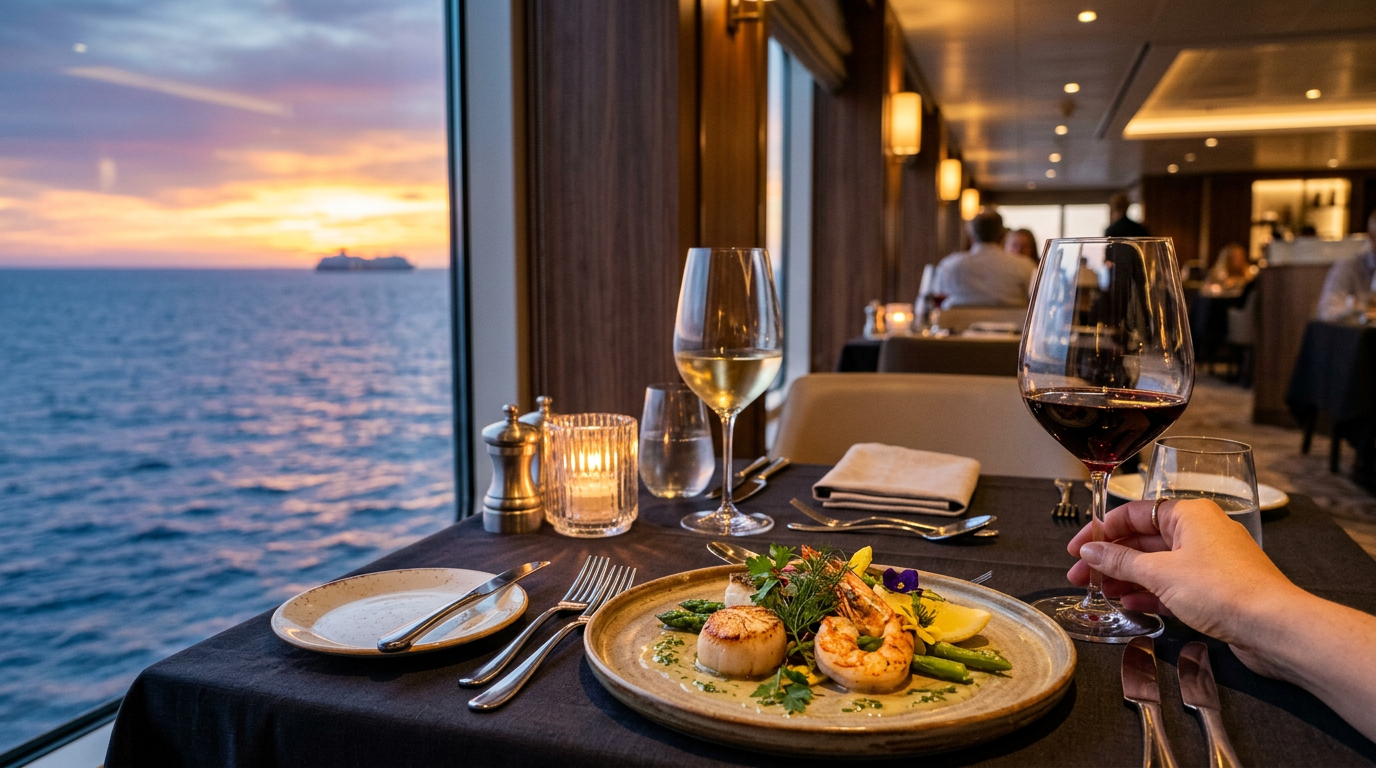
The idea that wine pairing is a complex science requiring years of study is one of the food world's most persistent and unhelpful myths. In reality, the fundamental principles of matching wine to food are intuitive, learnable in an afternoon, and based on a logic that has governed a thousand years of European table culture. Understanding them requires only an open mind, a willingness to experiment, and a basic grasp of why certain combinations work and others do not.
The starting point is a deceptively simple observation: wine and food that come from the same region tend to go together. The wines of Burgundy developed alongside Burgundy's food; Rioja evolved in tandem with the cooking of northern Spain. When you are unsure what to order in a restaurant, choosing a bottle from the same country or region as the food is a reliable default that rarely fails badly. This principle of regional congruence is the most practical rule in all of wine pairing and the most consistently rewarding to follow.
The Two Mechanisms: Complementation and Contrast
Wine pairings work by one of two mechanisms. Complementation occurs when the wine and food share similar characteristics that reinforce each other: a rich, oaky Chardonnay mirrors the creamy texture of a cream-based pasta sauce; Sauternes echoes the sweetness and richness of foie gras while cutting through its fat with natural acidity. Contrast occurs when the wine provides something the food lacks: a crisp Muscadet offers the acidity that oysters need; Champagne's bubbles and sharp edge cut through the fat of fried food to refresh the palate between bites.
Understanding which mechanism you are deploying allows you to extrapolate intelligently from examples you know to situations you have not encountered before. A rich, fatty dish generally benefits from a wine with good acidity (contrast); a delicate dish with subtle flavours benefits from a wine that does not overwhelm it (complementation at low intensity). These are not absolute rules but reliable orientations that provide a useful starting point for any pairing decision.
Acidity: The Wine Pairing Superpower
If one quality in wine is disproportionately valuable for food pairing, it is acidity. Acidic wines – whether white (Chablis, Vermentino, Verdicchio, Picpoul) or red (Barbera, lighter Pinot Noir, Gamay) – are extraordinarily versatile at the table because acidity performs two crucial functions simultaneously: it cuts through fat and richness, making the next bite taste as fresh as the first; and it balances and brightens the flavours of acidic dishes such as tomato-based sauces, citrus-dressed salads, and vinaigrette-dressed preparations.
This is why the classic Italian combination of tomato-based pasta with a high-acid Sangiovese (Chianti, Rosso di Montalcino, Morellino di Scansano) works so reliably: the acidity in the wine matches and harmonises with the acidity in the tomato, creating a coherent whole. And it is why a very low-acid, soft red wine – an overripe Australian Shiraz, for instance – can make a tomato-based dish taste flat and dull: the absence of acid in the wine emphasises the acidity in the food without resolution.
Tannin: Handle with Care
Tannin – the astringent compounds found in red grape skins – is the quality that makes wine pairing with food most critical. The issue is that tannins react with proteins, which is why tannic wine paired with lean fish produces a metallic, unpleasant sensation. The same tannins, however, bound to the fat and protein of a well-marbled steak, lose their astringency and become a positive structural element in the pairing. This is why Barolo, Brunello, and young Bordeaux essentially require red meat to be enjoyable; drunk alone, their tannins are overwhelming; drunk with appropriate food, they become magnificent.
Low-tannin reds – Pinot Noir, Beaujolais, lighter styles of Grenache and Gamay – are significantly more flexible. A lightly chilled Chambolle-Musigny with salmon is a pairing of considerable elegance; a glass of Fleurie Beaujolais with grilled tuna presents no problem at all. The key variable is often the sauce rather than the protein: any red wine reduction sauce makes red wine appropriate at the table, regardless of whether the protein beneath it is beef, chicken, or salmon.
Seafood and White Wine: Beyond the Simple Rule
The conventional wisdom that seafood pairs with white wine is both broadly correct and oversimplified. The more useful guidance is that seafood pairs with wines that share its saline, mineral character or that provide complementary acidity. Chablis Premier Cru – intensely mineral Chardonnay from Kimmeridgian limestone soils rich in ancient oyster fossils – has a genuine oceanic quality that resonates with fresh shellfish in a manner that is genuinely extraordinary. The iodine character in the wine seems to answer the same quality in a fresh oyster.
Muscadet, from the Loire Valley near Nantes, offers bracing acidity, minimal fruit, and a characteristic brininess that makes it the default wine for moules marinières throughout coastal France. Albarino from Galicia – produced within sight of the Atlantic – is one of the most versatile white wines for seafood: peach and apricot fruit balanced by clean acidity and a persistent saline finish make it effective with preparations from simple grilled fish to complex seafood rice dishes. Vermentino from Sardinia, with its herbal and slightly bitter quality, works brilliantly with the bold, olive-oil-dressed fish of the Mediterranean.
Champagne: The Most Versatile Food Wine
Champagne is arguably the most versatile food wine in the world, a claim that surprises many people who associate it primarily with celebration rather than gastronomy. Its combination of high acidity, fine bubbles (which cleanse the palate between bites), and moderate alcohol (which prevents palate fatigue over a long meal) makes it effective with an enormous range of foods. Champagne with oysters is canonical; Champagne with fried chicken is a more recent discovery that has become a cliche of fashionable dining but remains genuinely delicious; Champagne with aged Comté cheese, with risotto, with smoked salmon, and even with sushi all represent legitimate and pleasurable pairings.
The key is choosing the right style of Champagne for the food. Blanc de Blancs (made entirely from Chardonnay) offers the highest acidity and the most delicate flavour, making it ideal for oysters, caviar, and subtle seafood preparations. Blanc de Noirs (made from Pinot Noir and/or Pinot Meunier) has more body and richness, working well with poultry, light meat dishes, and more assertive flavours. A mature vintage Champagne, with its complex secondary flavours of bread, mushroom, and dried fruit, can pair with dishes of considerable complexity – a roasted chicken with truffle, a carefully aged Brie, or a complex mushroom risotto.
Classic Pairings Worth Learning by Heart
Beyond the general principles, certain canonical pairings encode centuries of accumulated experience: Champagne with oysters; Sancerre with fresh goats' cheese; Burgundy with duck or beef; Barolo with white truffle pasta; Rioja Reserva with roasted lamb; Gewurztraminer with Alsatian choucroute or Southeast Asian food; Sauternes with Roquefort; Riesling Spätlese with roasted pork belly; Vermentino with grilled branzino. These combinations are not arbitrary conventions but practical wisdom refined over generations of genuine eating and drinking pleasure.
For the travelling food lover, the most practical guidance is simple: trust local knowledge in each environment. The wines of any given region have been consumed alongside local food for generations, and the combinations that locals consider obvious have been refined to a high standard. Asking a restaurant owner or wine bar host what they drink with the local speciality will almost always produce reliable guidance. And drinking a wine in the vineyard that produced it, with food from the same valley – whether a Rioja in La Rioja, a Chablis in Chablis, or a Barolo in Piedmont – remains one of the most reliable guarantees of a genuinely pleasurable pairing available to the travelling food lover.