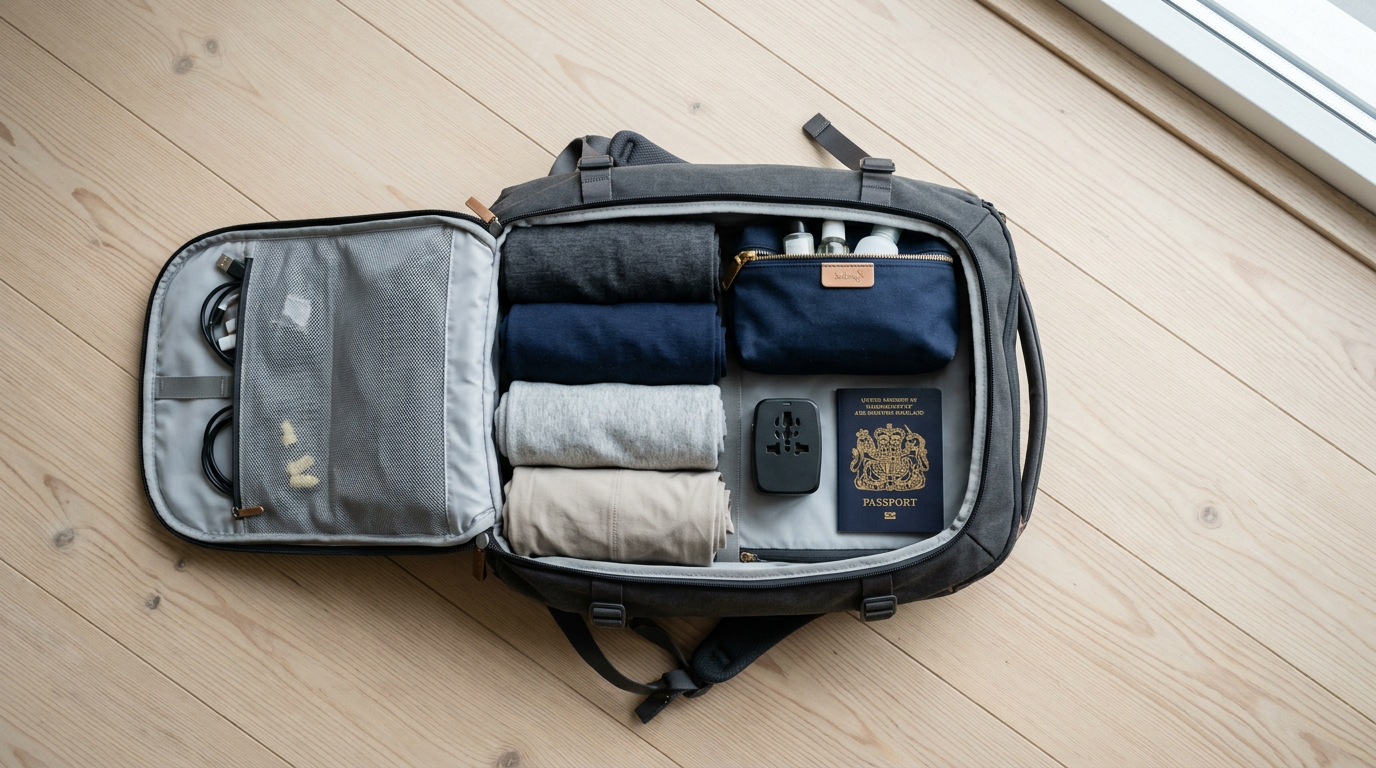
The heaviest luggage is almost never the result of physical necessity. Experienced travellers who have refined their packing over many trips consistently carry less than novices because they have learnt, through direct experience, that the vast majority of what most people pack is never used, never actually needed, and simply makes the experience of moving through the world more cumbersome. The goal of packing light is not self-deprivation; it is the liberation that comes from having everything you need and nothing you do not.
The freedom that comes with genuinely light luggage is immediate and concrete. You move faster through airports and stations. You avoid check-in queues and baggage carousels. You can take public transport rather than taxis. You can walk to your accommodation rather than waiting for transfers. You can change plans spontaneously without the logistical overhead of large bags. You arrive less tired and more ready to engage with the place you have come to visit. These practical advantages accumulate into a meaningfully better travel experience that has nothing to do with self-congratulation about minimalism.
The Core Principle: Versatility Over Volume
The foundation of packing light is clothing versatility – choosing items that can be combined in multiple ways to create genuinely different outfits rather than packing one outfit for each day. A well-chosen travel wardrobe built around two or three neutral base colours can produce far more outfit combinations than a collection of individual items chosen without reference to each other. Navy, grey, white, and khaki work particularly well as the foundation of a travel capsule wardrobe because they combine successfully with each other and with most accent colours.
Fabric choice is as important as colour. Merino wool has become the gold standard for travel clothing among experienced light packers: it resists odour far more effectively than synthetic or cotton fabrics (meaning items can be worn multiple days before washing), dries quickly, regulates temperature across a wide range of conditions, resists creasing, and looks presentable in both casual and smart-casual contexts. A merino base layer that can be worn alone in warm weather or under other layers in cold conditions is genuinely multi-purpose in a way that few other garments are.
Choosing the Right Bag
The bag itself is a critical choice. A carry-on sized backpack (typically 30-40 litres for most trips) combines the advantages of keeping luggage in the aircraft cabin – no checked baggage fees, no waiting, no risk of lost luggage – with the practical convenience of leaving hands free for navigation and spontaneous activity. The best travel backpacks offer a clamshell opening that allows full access to the contents without unpacking, a structured back panel with a hip belt for heavy days, and external organisation that keeps frequently needed items accessible.
Rolling bags remain the right choice for certain trip types: cruises and resort holidays where transfers are managed, trips involving formal clothing that should not be compressed, and very long trips where the volume of a carry-on is genuinely insufficient. For most urban travel and multi-destination trips, however, a well-fitted backpack of 35-40 litres is sufficient for two to three weeks of travel and is significantly easier to manage through the physical environments that modern travel involves.
The Packing Process: Start with Elimination
The most effective packing process begins not with choosing what to include but with aggressively eliminating what is not strictly necessary. Lay out everything you think you need; then remove half of it. This sounds extreme, but experienced light packers consistently report that this is approximately the right ratio: most people's initial packing instinct includes roughly twice as much as they will actually use. Shoes are the most common culprit – most travellers pack far more pairs than they use, when in reality one pair of good walking shoes and one pair suitable for smarter occasions is sufficient for most trips.
Electronic devices and their associated accessories are the second major source of unnecessary weight. The question to ask about every electronic item is not "might I want this?" but "will I use this enough to justify carrying it every time I move?" Tablets are frequently carried but rarely used when a smartphone provides most of the same functions. Laptops are essential for working travellers but genuinely optional for those who are not. Camera equipment deserves particular scrutiny: a modern smartphone camera is sufficient for most travel photography, and the lenses and accessories that seemed essential at home often go unused on the road.
Toiletries and Personal Care
Toiletries are a significant contributor to baggage weight that can almost always be reduced substantially. The key principle is buying locally: most destinations have pharmacies and supermarkets selling the essentials of personal care, usually at prices comparable to or better than home. Carrying shampoo, conditioner, body wash, and similar products in full-sized containers from home makes little sense when small amounts of the same products can be bought on arrival or decanted into small reusable containers for the flight.
Solid toiletries – bar shampoo, conditioner bars, solid soap, and solid sunscreen – have improved dramatically in quality over recent years and offer genuine advantages for light travel: they are not subject to liquid restrictions, they take up less space by volume than their liquid equivalents, and they are not at risk of leaking in a compressed bag. Several specialist travel brands now offer high-quality solid versions of almost every product category, making the transition from liquid to solid toiletries relatively straightforward for most travellers.
The discipline of packing light, once established, tends to become self-reinforcing. The experience of moving easily through the world with a small, well-organised bag is so consistently better than the alternative that travellers who achieve genuine light packing rarely return to their old habits. The initial investment of time in building a well-chosen capsule wardrobe, identifying the right bag, and refining the packing list over a few trips repays itself many times over in reduced stress, greater spontaneity, and the specific pleasure of knowing that everything you need is exactly where you can find it.