The fashion industry is one of the most resource-intensive and polluting sectors of the global economy. Clothing production accounts for around 10% of global carbon emissions, consumes enormous volumes of water, and generates substantial chemical pollution in the countries where most manufacturing occurs. Fast fashion – the business model based on high volumes, low prices, and rapid turnover of styles – has dramatically amplified these impacts over the past two decades, creating a system in which garments are worn only a handful of times before disposal.
The good news is that the alternative to this system – investing in fewer, better-quality garments designed for long life – is also, almost always, the correct choice from a purely practical travel perspective. A well-chosen, high-quality travel wardrobe that lasts ten years is not only more sustainable than ten years of fast-fashion purchases; it is also more convenient, more comfortable, more stylish, and, when the total cost over time is calculated, usually less expensive. The ethical and practical cases for sustainable travel dressing align more completely than in almost any other consumer category.
The Natural Fibre Advantage
Natural fibres – wool, cotton, linen, silk – have significant environmental advantages over most synthetic alternatives, particularly when sourced responsibly. They are biodegradable at end of life. They are produced from renewable resources. They have been refined over millennia to provide comfort, durability, and performance across a wide range of conditions. For travel specifically, natural fibres often outperform their synthetic counterparts in exactly the attributes that matter most: temperature regulation, odour resistance, comfort against the skin, and visual quality that ages well rather than deteriorating rapidly.
Merino wool deserves particular mention as the outstanding natural fibre for travel clothing. Unlike conventional wool, merino fibres are fine enough to wear directly against the skin without irritation. The natural structure of the fibre creates air pockets that provide insulation in cold conditions and ventilation in warm ones, making merino genuinely functional across a wide temperature range. Its natural lanolin content provides significant odour resistance: a merino base layer can typically be worn for two or three days without developing unpleasant odour, a property of considerable practical value for travellers who need to reduce laundry frequency.
Linen for Warm Climates
Linen, derived from the flax plant, is the ideal fabric for warm-climate travel. It is among the most environmentally responsible of all common textile fibres: flax cultivation requires little irrigation or pesticide compared to cotton and uses the entire plant with minimal waste. Linen fabric breathes exceptionally well, absorbs moisture and releases it quickly, and becomes softer and more comfortable with each wash rather than degrading over time. A well-made linen shirt, dress, or pair of trousers will last for decades and improve throughout that time.
The main disadvantage of linen – its tendency to crease – is, in the context of travel, less significant than it appears. Linen creases are fundamentally different from the creases that synthetic and cotton garments develop when packed: they are a natural characteristic of the fabric that signals quality and authenticity rather than careless packing. In the Mediterranean, Caribbean, and South-East Asian coastal environments where linen performs best, a gently creased linen garment is a mark of relaxed elegance rather than poor presentation. The key is choosing linen in a weight and cut that wears the creases gracefully rather than looking simply crumpled.
Building the Capsule: Principles and Practice
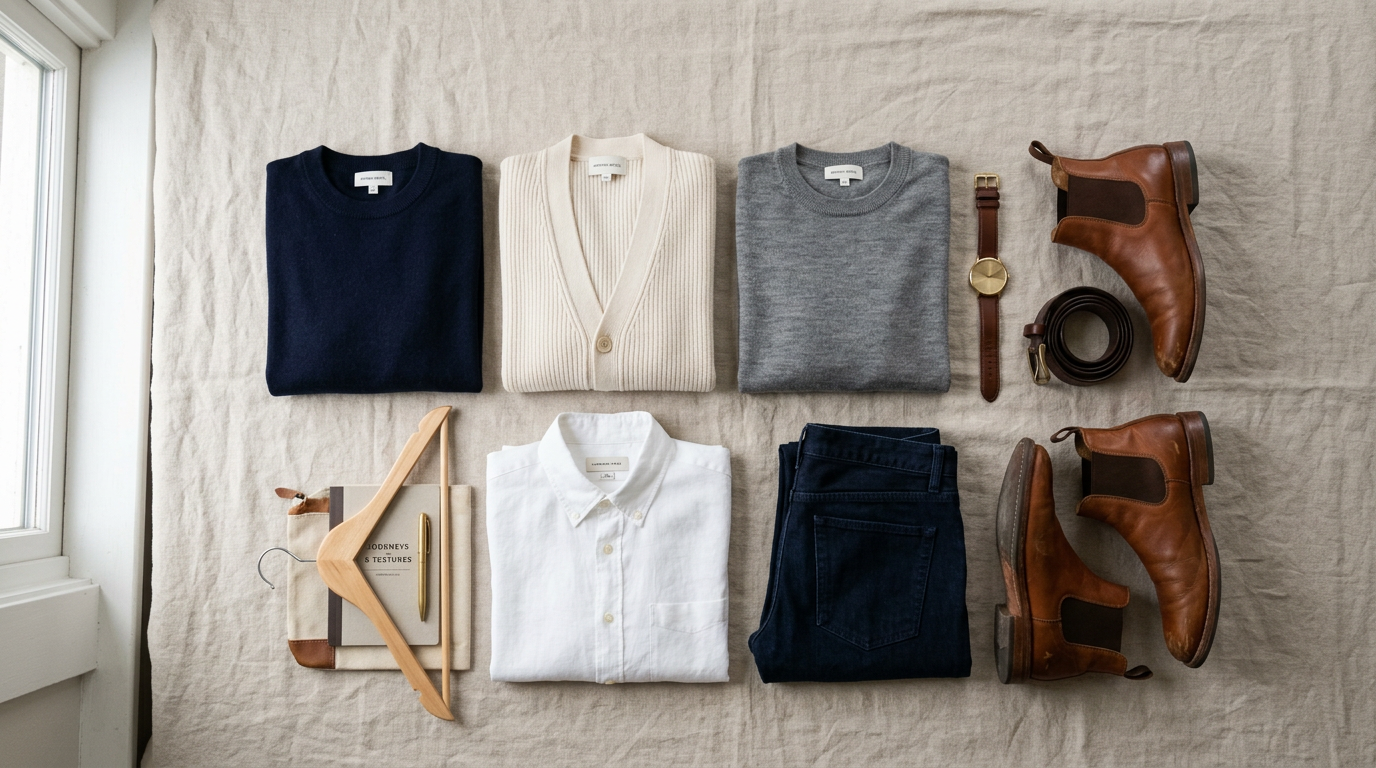
A sustainable travel capsule wardrobe is built around a small number of versatile pieces that combine with each other in multiple ways. The practical minimum for a two-week trip in moderate climates is remarkably small: three to four tops, two pairs of trousers or a combination of trousers and a dress or skirt, one light jacket or midlayer, one smarter option for evenings, and one to two pairs of well-chosen shoes. These nine or ten items, chosen with care for colour compatibility and versatility, will generate more than adequate outfit variety while fitting comfortably in a carry-on bag.
Colour is the most important single decision in building a capsule. A wardrobe built around two complementary neutral colours – navy and white, grey and khaki, black and camel – creates mathematical combinations that produce variety from a small number of pieces. Adding one or two accent pieces in a contrasting colour introduces visual interest without complicating the combination logic. The tendency to pack items in many different colours, each requiring specific partners, is the most common source of overpacking and under-utilisation in conventional holiday packing.
Caring for Travel Clothing
Extending the life of well-chosen travel clothing through appropriate care is an important part of sustainable wardrobing. Natural fibres respond particularly well to careful laundering: washing at lower temperatures, avoiding harsh detergents, drying flat rather than in a tumble dryer, and storing items properly between trips. Merino wool in particular benefits from hand washing in cool water with a dedicated wool wash; machine washing on a delicate cycle is acceptable but repeated machine washing gradually reduces the softness and resilience of the fibre.
Repairs are the other essential component of clothing longevity. The ability to resew a button, mend a small tear, or re-hem a garment extends the useful life of quality clothing almost indefinitely and is, in practice, a small investment of time that pays significant dividends. Several specialist travel clothing brands now offer repair services as part of their commitment to longevity and circularity, recognising that a garment repaired and returned to active use is categorically better than one discarded and replaced, however responsibly the replacement is manufactured.
The best travel wardrobe is, in the end, one that has been assembled with the same deliberateness and attention to quality that characterises the best travel itself: thoughtfully chosen, well cared for, and designed to serve not a single trip but a lifetime of journeys. This approach – fewer things, better chosen, genuinely used and genuinely valued – is not a sacrifice; it is a refinement, and it makes both the packing and the travelling meaningfully better.