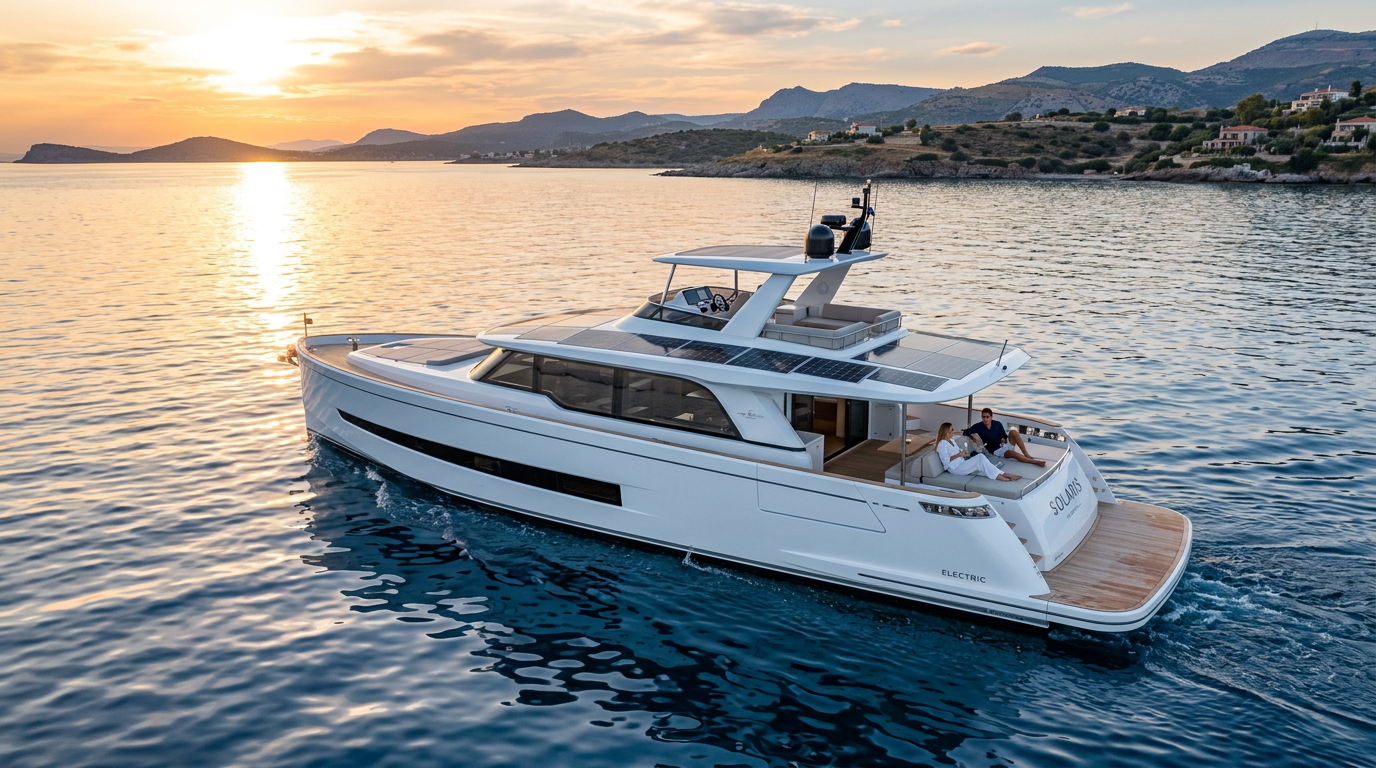
Electric propulsion for boats is not a new idea. Torpedoes, submarines, and harbour craft have used electric motors for well over a century. What is genuinely new is the combination of high-energy-density battery technology developed primarily by the automotive industry, power electronics capable of managing large electrical systems efficiently, and a regulatory and consumer environment creating unprecedented demand for zero-emission marine transport across a wide range of scales.
The transformation is most visible at the smaller end of the market. Electric outboard motors from companies including Torqeedo, ePropulsion, and Elco are now technically competitive with petrol equivalents for day trips and short passages, offering comparable performance with significantly lower operating costs, near-silence, and zero direct emissions. For users whose boating consists primarily of harbour manoeuvring, short coastal passages, and day sailing on protected waters, an electric outboard or inboard is already the rational choice on purely practical grounds.
The Battery Challenge at Larger Scales
As vessel size increases, the weight and volume penalties of current battery technology become increasingly significant. The energy density of the best lithium-ion batteries available today is approximately 250 watt-hours per kilogram – roughly 40 times less energy-dense than diesel fuel by weight. For a harbour ferry making short, predictable crossings with overnight charging, this trade-off is entirely manageable. For an ocean-going vessel making multi-day passages, current battery technology simply cannot provide the energy storage required without unacceptable weight penalties.
The practical response has been hybrid propulsion systems that combine diesel engines for long-range or high-power operation with battery banks for manoeuvring, slow-speed operation, and peak demand smoothing. Hybrid ferries in Norway, Sweden, and the UK are demonstrating fuel savings of 20-50% compared to conventional diesel equivalents. The Ampere, a Norwegian car and passenger ferry launched in 2015, became the world's first fully electric ferry and has accumulated years of operating data confirming both environmental and economic advantages.
Solar Integration
Solar power generation is increasingly integrated into electric and hybrid vessel designs. The energy available from solar panels is modest relative to marine propulsion requirements, but it is sufficient to contribute meaningfully to hotel loads – air conditioning, lighting, electronics – on anchored or slowly moving vessels, reducing or eliminating the need for diesel generators. Some solar-augmented vessels in Mediterranean and Caribbean waters are demonstrating the ability to operate for extended periods entirely on stored solar energy during daylight hours.
Silent Yachts, an Austrian builder, has developed a range of solar-electric catamarans that have completed blue-water ocean crossings on solar power alone. The boats carry sufficient battery capacity for overnight passages and rely primarily on solar charging to replenish energy during the day. In tropical latitudes with strong sunlight and moderate sailing speeds, this system allows genuinely range-unlimited cruising with zero fuel costs and zero engine noise – a combination that an increasing number of serious ocean sailors find irresistible.
The Superyacht Electrification Trend
The superyacht market – where budget constraints are significantly less binding than in commercial shipping – has become an important proving ground for advanced electric and hybrid technologies. Several leading builders including Sunreef Yachts and Greenline Yachts have built substantial product lines around solar-electric and hybrid propulsion, attracting environmentally conscious owners willing to pay a premium for cleaner, quieter operation.
The appeal of electric propulsion for superyachts is not merely environmental. Electric motors are inherently quiet – a quality of considerable value on a luxury vessel where machinery noise intrusion is a significant comfort factor. They require less maintenance than diesel engines (far fewer moving parts, no oil changes). They allow zero-emission operation in protected anchorages where idling diesel engines would be prohibited. And they provide instantaneous torque delivery that makes precise manoeuvring in busy marinas significantly easier and more controllable.
Hydrogen Fuel Cells: The Longer-Term Solution
For larger vessels requiring more energy than batteries can practically store, hydrogen fuel cells represent the most promising zero-emission alternative to batteries. A fuel cell converts hydrogen and oxygen into electricity, with water vapour as the only direct emission. The Hy4All project in Norway and MF Hydra, the world's first hydrogen-powered passenger ferry launched in 2021, are among the early commercial deployments demonstrating the practical viability of this technology in a marine context.
The challenges are significant: hydrogen requires either very cold storage (as liquid hydrogen at -253°C) or high-pressure gaseous storage, and the infrastructure for maritime hydrogen refuelling is in its infancy. However, the potential advantage is considerable: hydrogen offers energy density approaching that of diesel in terms of energy per cubic metre of storage volume, making it viable for vessels where the weight and volume constraints of battery technology are prohibitive.
The trajectory of electric marine propulsion is clear even if the precise timeline remains debated. Battery energy density will continue to improve; charging infrastructure at marinas and ports will expand; regulatory pressure on diesel emissions in sensitive marine environments will increase; and the operating cost advantages of electric propulsion will become more apparent as more operators accumulate real-world data. The direction is set, and the pace of change is accelerating.