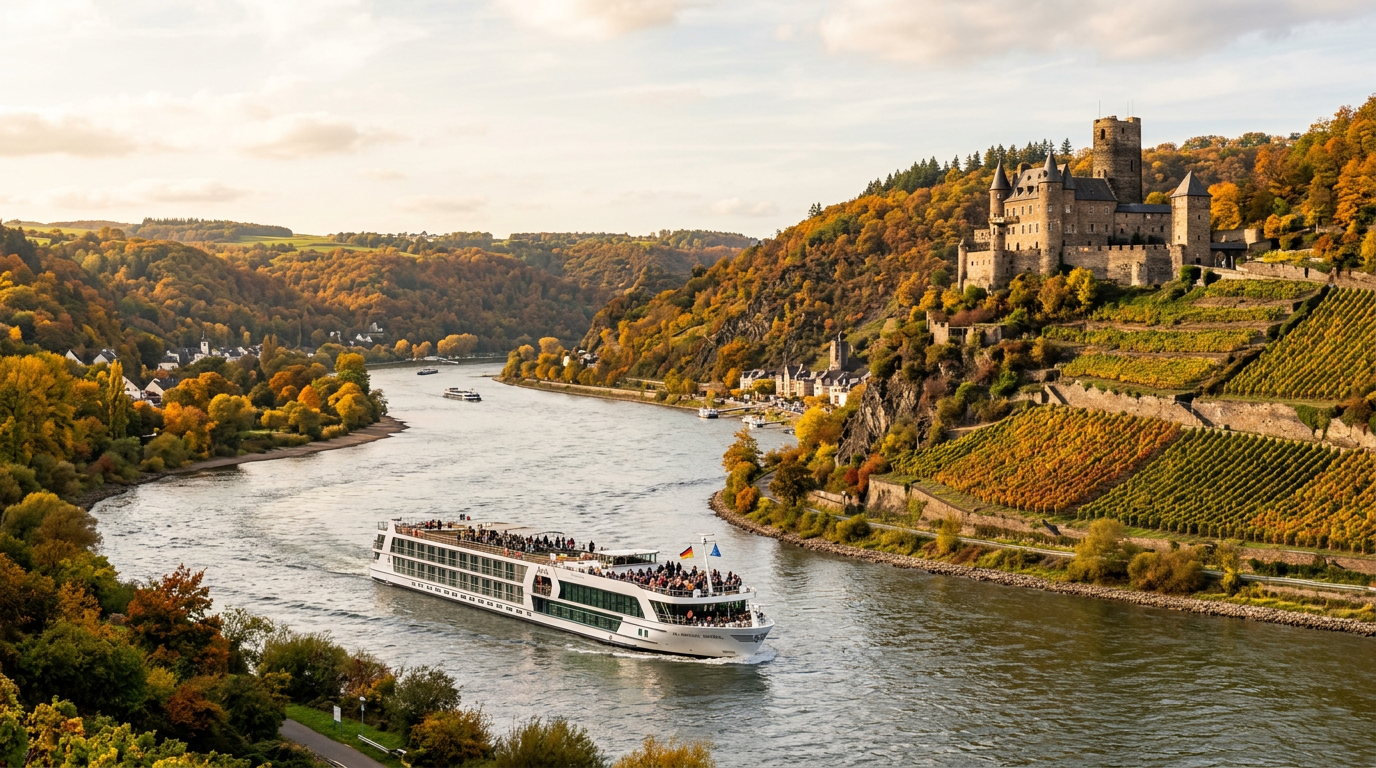
River cruising has undergone a remarkable transformation in the past two decades. Once considered a niche activity for older travellers content with gentle scenery and early dinners, it has reinvented itself as one of the most sophisticated and culturally immersive ways to experience Europe. The new generation of river cruise vessels – sleek, shallow-drafted, and thoughtfully designed – offer standards of accommodation and cuisine that rival boutique hotels, while delivering a travel experience that remains fundamentally impossible to replicate by land.
The appeal is easy to understand. River cruising in Europe means unpacking once and waking up each morning at a different address. It means the ability to walk directly from your ship into the centre of historic cities that, in many cases, were deliberately built to serve their rivers. It means a pace of travel – typically 150 to 250 kilometres per day – that is unhurried enough to actually absorb what you are seeing, yet varied enough to prevent the kind of destination fatigue that can afflict travellers who spend too long in any one place.
The Danube: Europe's River of Kings
The Danube is the most popular river cruising route in Europe, and with good reason. At nearly 2,900 kilometres, it is the longest navigable river on the continent, flowing from its headwaters in the Black Forest through ten countries before emptying into the Black Sea. The classic Danube cruise runs between Vienna and Budapest, a distance of about 300 kilometres that encompasses some of the finest urban riverscapes in Europe. Vienna presents its imperial architecture to the river in a manner that suggests centuries of confidence; Budapest's Parliament building, illuminated at night and reflected in the Danube, is one of the great architectural spectacles of central Europe.
The most dramatic section of the Danube lies upstream from Vienna, through the Wachau Valley. This UNESCO World Heritage stretch, barely 36 kilometres long, is a concentrated masterpiece of European landscape: steep terraced vineyards producing the celebrated Grüner Veltliner and Riesling grapes, Baroque monasteries perched on cliffs above the river, and medieval castle ruins looking down from rocky promontories. The Abbey of Melk, sitting on a dramatic outcrop above the river with its golden Baroque towers, is one of the most recognisable images of Austrian heritage. Dürnstein, a tiny village where Richard the Lionheart was once imprisoned in a castle above the valley, rewards an afternoon's exploration.
Further along the Danube, the Gorge section between Romania and Serbia – the Iron Gates – offers scenery of an entirely different character: towering limestone cliffs, narrow passages, and the ruins of Roman roads carved directly into the cliff faces. This wilder, less-visited section of the river feels genuinely remote and rewards travellers who venture beyond the standard Vienna-Budapest itinerary.
The Rhine: Wine, Castles, and Gothic Grandeur
The Rhine offers a more compact but perhaps even more dramatically scenic river cruise than the Danube. The Middle Rhine Gorge, between Bingen and Koblenz, is a 65-kilometre UNESCO World Heritage Site that manages to pack a castle or fortification onto virtually every hill above the river. The Loreley Rock – the dramatic slate cliff that inspired one of the most famous German folk tales – dominates the narrowest point of the gorge. The castle at Rheinfels, once the most powerful fortress on the Rhine, now stands in magnificent ruin above the town of St Goar.
The Rhine Valley is wine country of the first order. The steep terraced vineyards on either bank produce Riesling wines of extraordinary precision and longevity – wines that carry the minerality of the slate soils and the concentrated sunshine of these south-facing slopes in every glass. A Rhine cruise in September and October, during the grape harvest, brings the additional pleasure of watching the vendange in progress and tasting new wine at riverside Weinstube. The Christmas market season, from late November, transforms the river towns into a display of fairy-lit charm that is genuinely magical.
The Rhône: Provence and Burgundy by Water
The Rhône-Saône river system in France offers a culinary journey unparalleled in European river cruising. Beginning in Lyon – widely considered the gastronomic capital of France and arguably the world – a Rhône cruise travels through some of the most celebrated wine regions on the planet: Beaujolais, Côtes du Rhône, and the Provence appellations of Châteauneuf-du-Pape and Gigondas. The river passes through Avignon, whose medieval Papal Palace dominates the skyline above the famous broken bridge; through Arles, where Van Gogh found the extraordinary southern light that transformed his painting; and eventually to the Camargue delta, a vast wetland landscape of pink flamingos and wild white horses.
What distinguishes the Rhône from other European river routes is the seamless integration of landscape, food, and wine. Shore excursions from a Rhône river cruise might include a truffle market in Périgord, an olive oil tasting in Les Baux-de-Provence, or a private visit to one of the grands crus châteaux of the northern Rhône appellation. This is travel that engages all the senses simultaneously, and the combination of genuine cultural depth with considerable physical beauty makes the Rhône one of the most rewarding river routes in Europe.
The Seine: Paris and Normandy
A Seine river cruise offers the unique experience of spending multiple nights moored in Paris – waking up to the Eiffel Tower or Notre-Dame from your cabin window – before journeying downstream through Normandy to the English Channel. The Seine through Paris is itself a UNESCO World Heritage Site, and the perspective it offers on the city's bridges, quays, and riverside architecture is one that most visitors never experience. The city looks entirely different from the water: more intimate in some ways, more overwhelming in others.
Downstream from Paris, the river enters Normandy through a series of chalk cliffs, apple orchards, and half-timbered Norman villages. Rouen, the site of Joan of Arc's execution and home to one of the finest Gothic cathedrals in France – the one Monet painted obsessively in different lights – makes an excellent half-day excursion. The D-Day beaches, accessible from the river port of Caudebec-en-Caux, provide a sobering counterpoint to the pastoral beauty of the surrounding countryside. A Seine cruise that incorporates the Normandy landing sites delivers one of the most emotionally complex travel experiences in Europe.
Practical Notes for River Cruisers
River cruise ships are designed for the constraints of the inland waterway network. Maximum beam on Rhine ships is 11.4 metres (set by the width of the locks); Danube ships can be slightly wider. Passenger capacity typically ranges from 100 to 200 guests, making river ships genuinely intimate in comparison to ocean vessels. Most river cruise lines include shore excursions, wine, beer, and non-alcoholic drinks at meals in their fares, making actual expenditure more predictable than on comparable ocean sailings.
Water levels are the principal weather-related concern for river cruisers. Very high water in spring (following a heavy Alpine snowmelt) can cause bridges to be impassable; very low water in late summer can ground vessels on shallow sections. Reputable river cruise lines have procedures for dealing with both situations – typically substituting coach transfers or itinerary adjustments – and travel insurance that covers "acts of nature" itinerary changes is strongly recommended. With the right preparation, a European river cruise delivers an intimacy and depth of experience that ocean cruising, for all its pleasures, simply cannot match.