The relationship between cruise ships and extraordinary food is well established. Modern cruise vessels, particularly at the premium and luxury end of the market, offer dining experiences that rival the best restaurants in major cities: multi-course tasting menus by celebrated chefs, exceptional raw material sourcing, skilled sommelier programmes, and service at a level that few shore-side restaurants sustain across multiple seatings daily. The challenge for passengers who care about their wellbeing is not finding food that is delicious – that is easy – but navigating the relentless availability of exceptional food and drink without accumulating the energy surplus that can make a long cruise feel physically depleting rather than restorative.
The physiological reality of cruise eating is that the combination of high-quality food, social eating environments that encourage extended dining, reduced baseline physical activity compared to daily life, and the psychological permission that holiday contexts grant to indulgence creates conditions that are genuinely challenging for nutritional balance. Studies of passenger eating behaviour suggest that caloric intake on cruise ships averages significantly higher than in daily life at home. The question is not whether to enjoy the food – that would be missing the point entirely – but how to enjoy it in ways that support rather than undermine the physical and mental energy that makes the voyage enjoyable.
Breakfast: The Strategic Meal
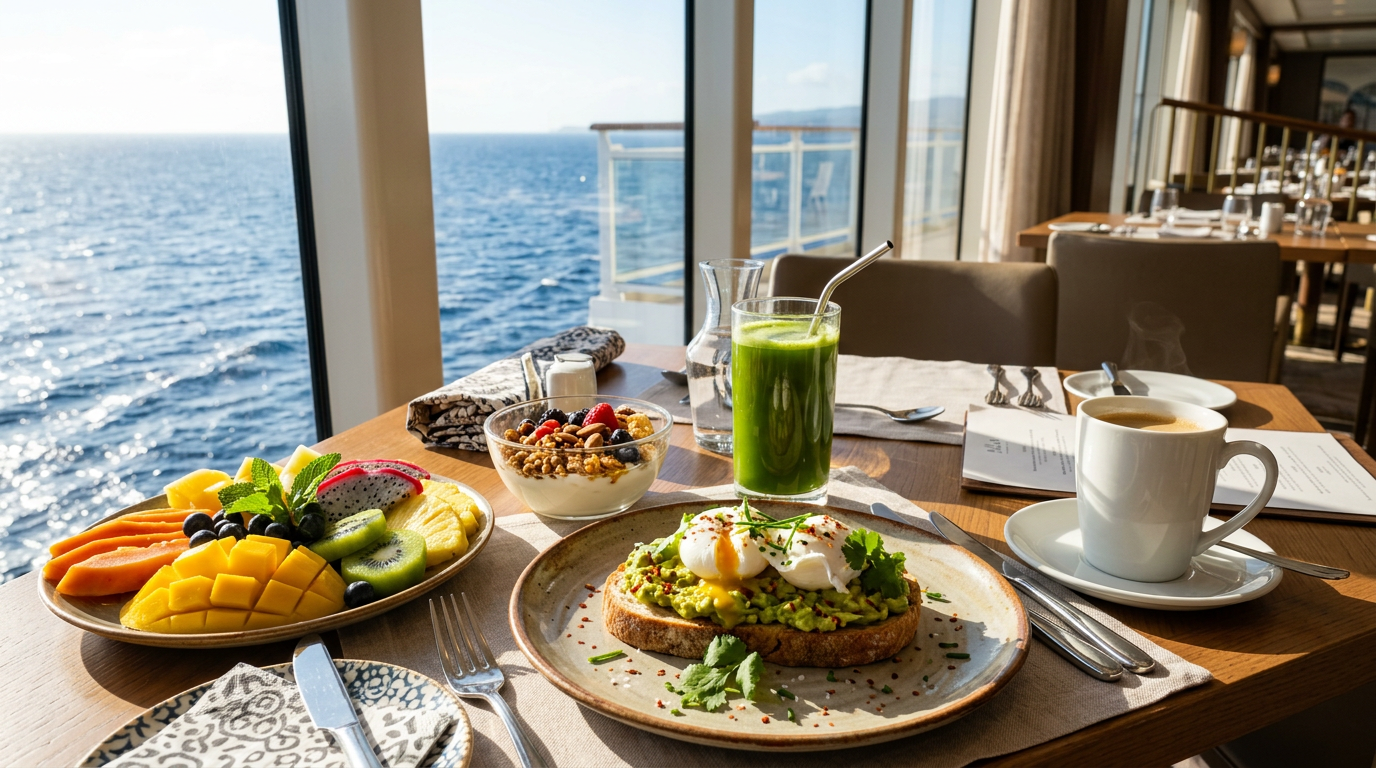
Breakfast on a cruise ship is one of the most important nutritional decisions of the day, and one that many passengers approach in ways that create difficulties for the rest of it. The abundant buffet format that characterises most shipboard breakfast service can easily lead to very large, calorie-dense meals that compromise energy levels for the morning and create a pattern of elevated intake that persists throughout the day. The alternative – a considered, protein-and-fibre-rich breakfast that provides sustained energy without excessive caloric loading – sets up the rest of the day far more effectively.
Practically, this means prioritising eggs in various forms, smoked fish, fresh fruit, yogurt, and whole-grain bread over pastries, full cooked meats, and sweet items at the buffet. Fresh fruit, in particular, tends to be available in exceptional variety and quality on cruise ships, often including tropical varieties not easily found at home, and represents one of the best uses of buffet capacity from a nutritional perspective. The principle of eating to appetite rather than to capacity applies most critically at breakfast, when the choices made establish the hormonal and psychological context for the rest of the day's eating.
Hydration: The Overlooked Factor
Adequate hydration is one of the most consistently neglected aspects of cruise wellness, and one of the most consequential. The combination of air-conditioned environments (which are dehydrating), increased alcohol consumption, warm weather on deck, and the social busyness that can crowd out attention to basic physical needs creates conditions that predispose many cruise passengers to chronic mild dehydration throughout the voyage. The symptoms of mild dehydration – fatigue, reduced cognitive performance, headache, and irritability – are often attributed to other causes and treated with food, rest, or medication rather than the water that would address them directly.
Maintaining consistent water intake throughout the day – targeting a minimum of two litres for non-active days and more on active port days – makes a substantial and measurable difference to energy levels, cognitive clarity, sleep quality, and general wellbeing. Carrying a large reusable water bottle and keeping it visible is among the simplest and most effective single wellness interventions available on a cruise. The strategy of drinking a large glass of water before each meal and before consuming alcohol reduces both alcohol absorption rate and overall caloric intake through a straightforward mechanical mechanism.
The Art of Eating to Pleasure Rather Than Capacity
The most important single principle of healthy cruise eating is a distinction between pleasure and capacity. The pleasure of food – its flavour, texture, aroma, and the social context of its consumption – peaks early in any meal and diminishes steadily thereafter. The discomfort of overeating, conversely, builds gradually and peaks after the meal is over. Eating to genuine flavour pleasure rather than to physical capacity means stopping earlier, tasting more attentively, and ending each meal with energy and comfort rather than the dull satiety that comes from finishing everything on the plate out of habit or social obligation.
Applied specifically to the cruise context, this principle suggests a different approach to the tasting menu format that is common at premium onboard restaurants. Rather than eating every course to completion, tasting each course attentively and leaving what does not contribute further pleasure is a form of respect for the food and for your own bodily intelligence. The chef's intention is to provide flavour experiences, not to ensure maximum caloric transfer; leaving food on the plate after the flavour experience has been received is not waste but appropriateness.
Port Eating and Local Nutrition
Shore excursion eating provides a valuable nutritional counterbalance to shipboard abundance. Local markets, street food vendors, and neighbourhood restaurants in the ports visited typically offer food that is less rich, more vegetable-forward, and more representative of the dietary patterns of people who live in the region than the international fine-dining style of shipboard restaurants. Eating local food during port visits – seeking out the morning market, the neighbourhood bakery, the street food that residents actually eat – is both a more authentic cultural experience and a useful nutritional complement to the richness of the ship's dining.
Active port days also provide the most significant opportunity for increasing physical activity that the cruise itinerary offers. Walking tours of several hours, cycling excursions, snorkelling, kayaking, and hiking in coastal landscapes all provide the cardiovascular stimulus that days at sea do not, and create an energy deficit that justifies greater indulgence at dinner without the consequences that equivalent indulgence on a sedentary sea day might produce. Planning a mix of active and passive excursions at each port is good wellness strategy as well as good sightseeing strategy: the active days earn the indulgent evenings, and the overall balance over a voyage of two or more weeks can be genuinely positive if this approach is maintained consistently.