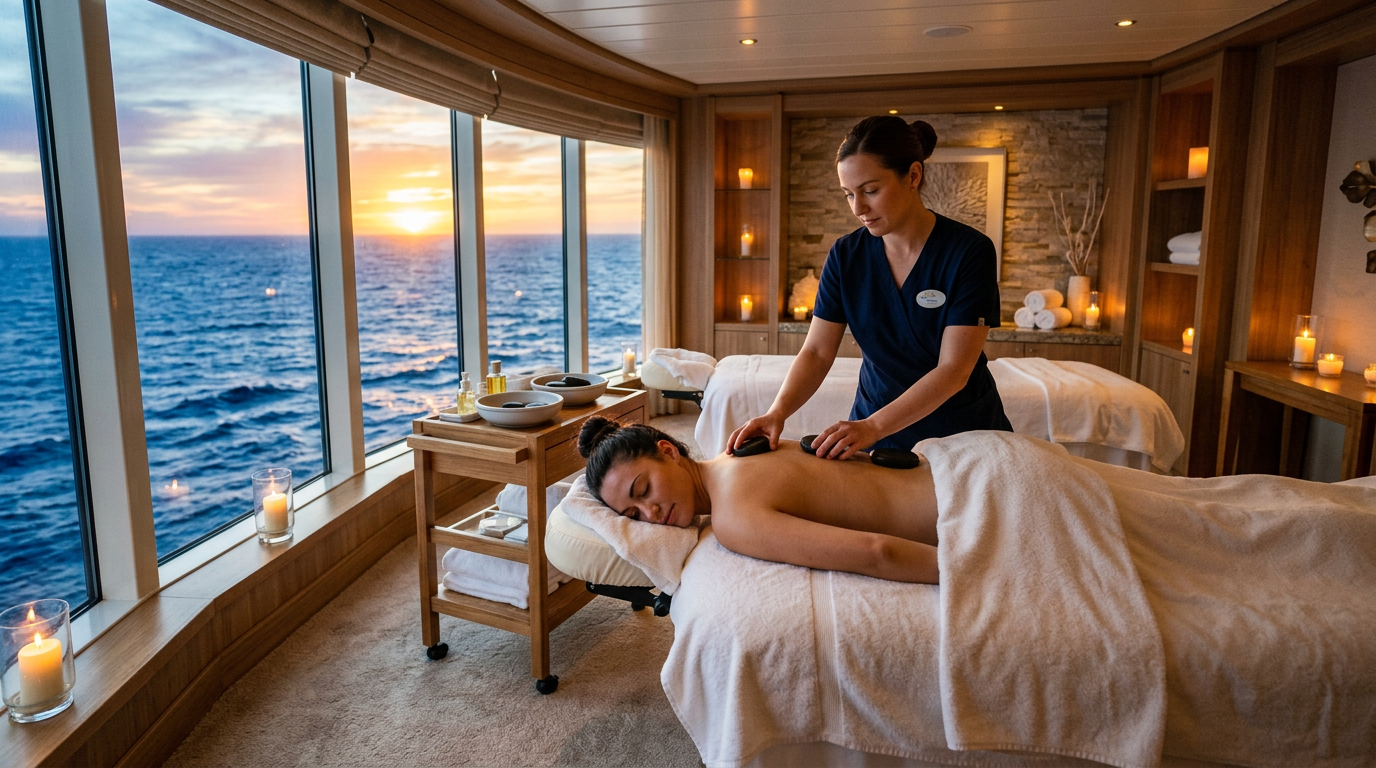
The shipboard spa has become one of the defining features of the modern cruise experience, and the best examples of this genre have evolved into genuinely impressive wellness environments that compare favourably with dedicated land-based spa resorts. What began as a modest massage room and sauna on mid-twentieth-century ocean liners has become, on contemporary vessels, a multi-deck complex offering dozens of treatment options, hydrotherapy circuits, beauty services, fitness programming, and in some cases nutrition consultations and comprehensive wellness retreats.
The ocean setting amplifies the effectiveness of spa treatments in ways that land-based facilities cannot easily replicate. The psychological effect of being surrounded by sea – the horizon's limitless extension, the rhythmic motion of the vessel, the quality of light that changes continuously as the sun moves across water – creates a baseline state of relaxed attention that enhances the therapeutic benefits of bodywork, heat therapy, and mindfulness practices. Therapists who have worked in both shipboard and land-based spas consistently report that clients achieve deeper states of relaxation more quickly at sea than in even the finest urban spa environments.
Massage Therapies: Understanding Your Options
Massage forms the core offering of most shipboard spas, and the variety available has expanded considerably. Swedish massage – the foundational technique of Western therapeutic massage, using effleurage, petrissage, and tapotement strokes to increase circulation, reduce muscle tension, and induce relaxation – remains the most popular single treatment and the appropriate starting point for those new to bodywork. A well-executed Swedish massage of sixty to ninety minutes is one of the most reliable means of achieving the physical and psychological relaxation that many passengers seek and that the hectic pace of embarkation day often defers.
Deep tissue massage addresses chronic muscle tension and postural issues at a level that Swedish massage does not reach. The technique uses sustained pressure on specific muscle groups and connective tissue layers, sometimes using elbow and forearm as well as hands, to release patterns of holding that have accumulated over months or years. The experience is more intense than Swedish massage – genuinely uncomfortable at points – but the results for people with significant neck, shoulder, or back tension are often remarkable and longer-lasting than the softer technique can achieve. Communicating clearly with the therapist about pressure preference is essential for getting the best from this type of treatment.
Hydrotherapy and Thermal Experiences
Hydrotherapy – the therapeutic use of water in various temperatures, pressures, and formulations – has been central to wellness traditions from ancient Rome and Japan to contemporary European spa culture. Modern cruise ship spas typically offer a thermal suite combining several distinct hydrotherapy environments: dry sauna at 80-90°C for cardiovascular stimulation and deep sweating; steam room with added humidity for respiratory benefit; cold plunge pool for contrast therapy that stimulates circulation and immune response; and various forms of hot tub or whirlpool bath for muscular relaxation.
The Thalassotherapy pool – a large, warm seawater or simulated seawater pool with jet massages, buoyancy resistance, and various hydrodynamic features – is found on better-equipped vessels and offers a form of aquatic therapy with particular resonance at sea. Seawater contains minerals including magnesium, calcium, and potassium that are absorbed through the skin during immersion, providing therapeutic benefits that fresh-water pools cannot offer. The combination of buoyancy, warmth, and mineral content creates a therapeutic environment for musculoskeletal conditions that is both effective and deeply pleasant.
Eastern and Global Traditions
The best shipboard spas draw from therapeutic traditions worldwide, offering treatments rooted in Ayurvedic medicine, Thai bodywork, Balinese healing practices, and Japanese spa culture alongside Western techniques. Ayurvedic Abhyanga – a full-body warm oil massage using medicated oils selected for the individual's constitutional type – offers both profound physical relaxation and, for those who engage with its philosophical framework, a form of holistic rebalancing that Western massage does not attempt. The warm oil technique, applied with long, rhythmic strokes that cover the entire body from scalp to feet, has been refined over three thousand years to produce an effect of integrated calm that is difficult to achieve through other means.
Thai massage, performed on a mat rather than a table and involving no oils but instead a systematic series of passive stretches, joint mobilisations, and acupressure techniques, offers a profoundly different experience from oil-based massage. Often described as "passive yoga," a skilled Thai massage session leaves the recipient feeling simultaneously relaxed and energised, with a sense of physical openness and ease that persists for days. It is particularly valuable for passengers who spend long periods at dinner tables, theatre seats, and deck chairs in postures that progressively compress and shorten the body's anterior muscle chains.
Making the Most of Shipboard Spa Facilities
Several practical points help maximise the value of spa investment on a cruise. Booking treatments in advance – ideally at embarkation or even before boarding – secures the time slots most suited to your schedule and avoids the disappointment of popular treatments being fully booked during sea days when demand is highest. Arriving early for treatments and allowing time in the thermal suite before massage significantly enhances therapeutic benefit by warming and relaxing musculature before manual therapy begins. And booking on port days, when most passengers are ashore, typically means quieter facilities and occasionally discounted pricing.
The most valuable investment in many spa programmes is the thermal suite day pass rather than individual treatments. Access to sauna, steam room, hydrotherapy pool, and relaxation areas for a full day provides a form of sustained, unhurried wellness immersion that isolated treatments cannot replicate. Used thoughtfully – moving between heat and cool experiences, spending time in the relaxation room between thermal sessions, taking on water consistently to compensate for fluid loss through sweating – a full day in a well-equipped thermal suite is among the most effective forms of acute wellness intervention available, and the ocean backdrop makes it something genuinely special.